



 The Daily News from the Art of Liberty Foundation
- DOJ Releases Damning Epstein Files Implicating Trump Right Before Christmas December 23, 2025
- Russia expands biometric ID system (again) December 23, 2025
- FiveMemeFri - If you spin the "Z" Amazon spells: A Mason - Plus MORE evidence December 23, 2025
- Pastor Spent Millions of 'Embezzled' BLM OKC Money on Properties and Caribbean Trips December 23, 2025
- Leaf-scan tells farmers when fruit is ripe – without destroying it December 23, 2025
- The Corbett Report – New World Next Year 2026 December 23, 2025
Our Friends at the Libertarian Christian Institute Break it Down… Chapter & Verse!
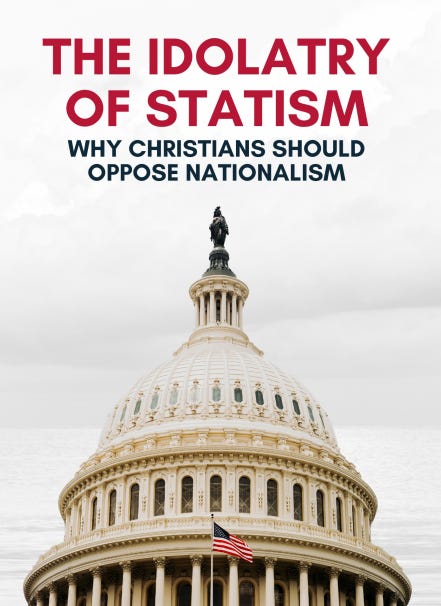
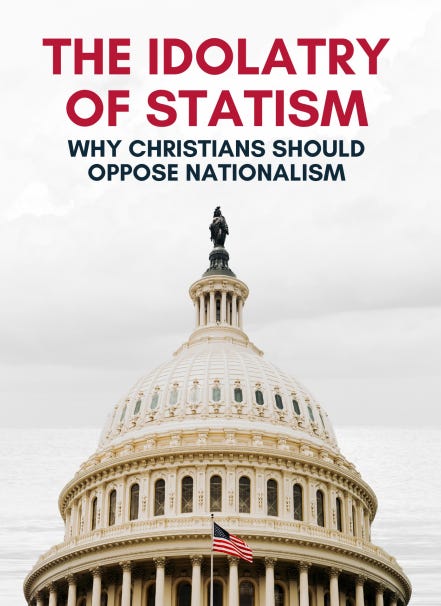
Etienne Note: The Art of Liberty Foundation has been distributing this pamphlet from the Libertarian Christian Institute for years as a PDF in our credit card-sized, uncensorable flashdrive o’ freedom, The Liberator and in its free Dropboxes. For Christmas I am republishing it in its entirety where I “value-added” it with memes and visualizations. We have struck a deal with the Libertarian Christian Institute to reprint the pamphlet (without the memes) and add it to our on-line store at ArtOfLiberty.org/Store.
The printing order has been placed and we are now accepting pre-orders that are scheduled to arrive and begin shipping on January 12th.
Order a Single Copy for $4.95 here: https://artofliberty.org/product/the-idolatry-of-statism/
Order a Five Copy “Friends Bundle” for $20 here: https://artofliberty.org/product/5-copies-of-what-anarchy-isnt-the-idolatry-of-statism/
The Idolatry of Statism – Why Christians Should Oppose Nationalism
Contributors:
-
Cody Cook Matthew
-
Curtis Fleischer
-
Paul Maitrejean
-
Laurence Vance
-
Jeff Wright
THE IDOLATRY OF STATISM
Contents
Jesus was an Anti-Nationalist ………………………………..……………………… 4
The American Sacrament that Denies Allegiance to Christ ………. 9
The Idolatry of Statism ……………………………..…………………………………… 13
The Astonishing Power of a Faithful Mustard Seed Revolution …. 18
Is America the Last, Best Hope of the World? ……………..……………… 24
Should Christians Cite the Pledge of Allegiance? ……………………….. 30
Are You an Imperial Christian? ……………………..…………………………….. 34
JESUS WAS AN ANTI-NATIONALIST
By Matthew Curtis Fleischer
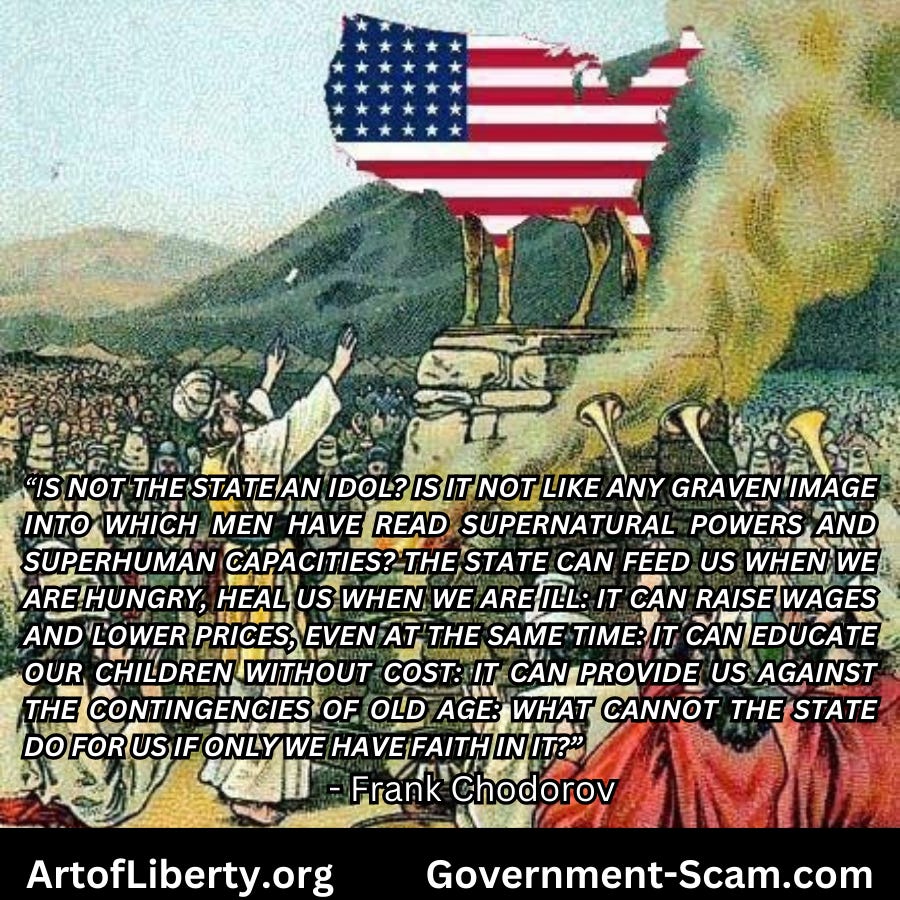
One of the more overlooked ways in which Jesus brought God’s ethical ideal into full bloom — or as Matthew 5:17 puts it, one way he “fulfilled” the Old Testament law and prophets — was by reorganizing God’s followers from a nation into a church. He denationalized them, transforming them from a typical earthly kingdom into the transnational, interethnic, nongovernmental, nonviolent, geographically dispersed organization we call the universal church. For these reasons, Jesus was an anti-nationalist which makes Christian Nationalism antithetical to the Christian faith.
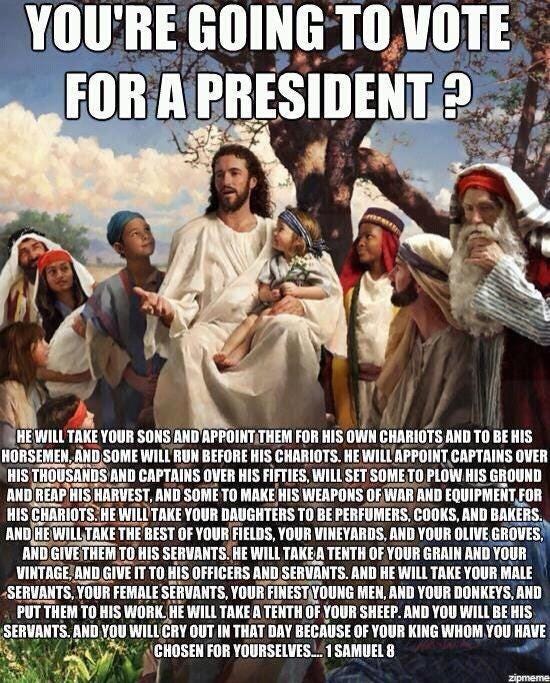
Originally, God formed his followers into the uniquely theocratic, demilitarized, morally advanced nation of Israel. A nation for sure, but by today’s standards, a largely non-nationalistic one. Eventually, the Israelites tired of being different and asked God for a king “such as all the other nations have” (1 Sam. 8:5), one “to go out before us and fight our battles” (8:20). So God, in one of his many Old Testament concessions, lovingly accommodated them.
But God also allowed such human-led nationalism to run its naturally destructive course. For the next seven centuries, the Israelites found themselves entangled in typical nationalistic struggles — political exile, a return home, rebuilding efforts, struggles for independence, and additional defeats. When Jesus arrived, Israel was under Roman occupation and struggling to keep its national identity alive. It was this nationalistic context that shaped the Israelites’ expectations for God’s promised Messiah, whom they hoped would resuscitate their national sovereignty.
Jesus was opposed to nationalism
But when Jesus arrived, he would have none of it. He didn’t gather God’s followers and take back territory, militarily or otherwise. Instead, he repeatedly declined to adopt any and every aspect of nationalism. He unequivocally rejected typical kingship, declining the devil’s offer of control over all the kingdoms of the world, refusing to use his supernatural powers for political gain, running from a crowd that wanted to enthrone him, waiting to announce his messiahship until he could redefine it to exclude nationalism, choosing to ride on a donkey instead of a war horse during his inauguration parade, and eventually declaring himself king of all people and all nations, not just Israel.¹
Likewise, he shunned all political power and commanded his followers to do the same, instructing them not to “lord it over” others, sending them into the world as sheep among wolves (not as a well-organized army), scattering them across the globe as foreigners, exiles, and sojourners whose primary citizenship is in heaven, and ordering them to put their swords away instead of defend him (let alone a nation), while also definitively proclaiming to the Romans that his followers do not fight.²
Jesus’ anti-nationalism was most evident in his open inclusion of Gentiles
Since the start of God’s direct intervention into human history, membership in his kingdom had been tied to Israelite ethnicity/ citizenship. Israel alone was God’s chosen people. Then Jesus began welcoming anyone who believed in God and sought to do his will. He made membership available to everyone. In fact, not only did he welcome gentile believers, he actively sought them out (Romans 1:6). He then commanded his apostles to do the same, instructing them to preach the gospel to all peoples and ordering them to “go and make disciples of all nations” (Matt. 28:19), which they did.³
Such inclusivity was always God’s goal. He simply used one group of people (Israel) to forge a path to all people. From the beginning, the Bible frequently tells us God chose Israel and set it apart not as an end in itself but as a means of blessing all people and all nations. Paul called God’s use of Israel for such a purpose 4 “the gospel in advance” (Gal. 3:8).
That’s why Jesus dissolved the political barriers that typically divide people and erased the morally arbitrary lines we call national borders. To paraphrase Paul, Jesus united Jew and Gentile. He “made the two groups one and has destroyed the barrier, the dividing wall of hostility … to create in himself one new humanity out of the two … and in one body to reconcile both of them to God through the cross” (Eph. 2:14-16). For in God’s fellowship, “there is neither Jew nor Gentile, neither slave nor free, nor is there male and female, for you are all one in Christ Jesus” (Gal. 3:28).⁵
Jesus’ command to love our enemies had the same effect. It was 6 the ultimate border destroyer. Because of it, there are no longer neighbors and non-neighbors. There are only neighbors. There are no longer natives and foreigners. There are only natives. There are no longer insiders and outsiders. There are only insiders. There is no longer an “us” and a “them.” There is only “us.”
Jesus wasn’t merely non-nationalistic; he was anti-nationalistic. He didn’t merely fail to meet Israel’s nationalistic expectations; he theologically terminated them. Jesus made a conscious, concerted effort to forever erase nationalistic divisions from among God’s followers. He definitively declared statehood to be inappropriate for his followers. According to Jesus, God doesn’t want his followers to make America into a Christian nation. He wants us to be the church. Hence the Bible doesn’t merely fail to support Christian nationalism, it warns against it.
Jesus didn’t merely reorganize God’s followers
He reconfigured their entire identity. Before Jesus, they were identifiable primarily by their unique nationalistic characteristics — the worship of only one God, a slightly advanced moral code, unusual ceremonial laws, different religious rituals, a restrained warfare policy, etc. After Jesus, they were set apart by their uniquely non-nationalistic characteristics — their border/race/ ethnicity-transcending inclusiveness and self-sacrificial love of everyone, even enemies. Therefore, what was once productive is now counterproductive. The nationalism that previously contributed to the distinctiveness of God’s followers now negates that distinctiveness.
Advancing God’s kingdom on earth today requires transcending political power struggles and nationalistic entanglements, Trumplike or otherwise, to express God’s equal and unconditional love for all people. In the way of Jesus, it means refusing to allow our love to be limited by national boundaries. It means living as a setapart people whose existence bears witness to a wholly different type of kingdom, an all-inclusive one.
Christian nationalism is backsliding
Any Christian nationalism today — any Christian-related favoring of one nation’s citizens over another’s — is ethical backsliding. It reverses what Jesus accomplished by reintroducing ethnic and political membership criteria, by resurrecting the dividing wall between Jew and Gentile, and by turning neighbors back into enemies. Just as Old Testament Israel rebelled against God by demanding a king “like the other nations,” Christians today rebel against God by prioritizing their national interests above universal love “like the other nations.”
Christians are principally citizens of a higher kingdom, and we must act like it.
THE AMERICAN SACRAMENT THAT DENIES ALLEGIANCE TO CHRIST
By Cody Cook
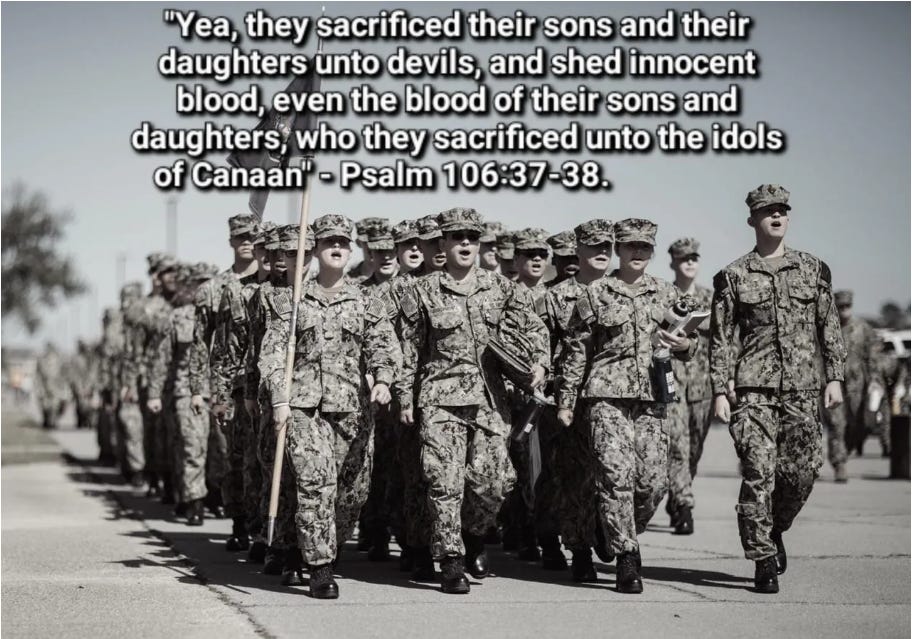
There’s an antebellum African-American spiritual song called “Down by the Riverside.” The song reflects upon being baptized and what it means for the one who receives the sacrament. Lines like “gonna try on my long white robe” and “gonna lay down my heavy load” are paired with “gonna lay down my sword and shield” and “ain’t gonna study war no more.”
This connection between being baptized and giving up violence is one that wouldn’t occur to many Christians. You can draw a path between the two from Scripture in a couple steps—from baptism as the sacrament that brings us into that faith, to Jesus’ exhortation that living that faith out requires nonviolence—but there is a more concrete relationship in the history of the early church.
Here’s what the second century church father Tertullian had to say about the relationship between Christianity and going to war:
“Inquiry is made about this point, whether a believer may turn himself unto military service… There is no agreement between the divine and the human sacrament, the standard of Christ and the standard of the devil, the camp of light and the camp of darkness. One soul cannot be due to two masters—God and Cæsar” (Tertullian, On Idolatry, ch. 19).
Did you catch that reference to sacraments? Tertullian says that no one can take both a divine and human sacrament. Nowadays, sacrament is a church-y word that Christians use to describe a religious rite, such as baptism or the Lord’s Supper. Was Tertullian taking this Christian word and applying it metaphorically to serving Caesar as if it were some kind of counterfeit religious rite? Actually, it was the opposite. The word “sacrament” was a pagan word which later took on a religious meaning for Christians.
In ancient Roman law and religious practice, a sacramentum was an oath or vow. In the first century B.C., Julius Caesar used the word to describe a military oath which recitation initiates the oath taker into the Roman military
According to Daniel G. Van Slyke’s 2007 article, “The Changing Meanings of Sacramentum: Historical Sketches,” this military usage “soon became the primary referent of sacramentum in non Christian authors” (p. 247, Antiphon 11.3, 2007). It became primarily associated with the sacramentum militare, and this was the oath that Tertullian had in mind. The sacramentum, which functioned as a solemn, religious rite, was taken by soldiers as a loyalty pledge to the emperor.
Loyalty pledge to the emperor
According to the Roman military author Vegetius, in this sacrament, “the soldiers swear that they shall faithfully execute all that the Emperor commands, that they shall never desert the service, and that they shall not seek to avoid death for the Roman republic!” One not only had to be willing to die for Caesar on the 7 field of battle, but the penalty for abdicating one’s responsibilities could be death.
The parallels with baptism seem obvious. A Christian who is baptized dies to self and former allegiances, joining the body of Christ to do Christ’s will. When Jesus asks his disciples in Mark 10:38-39 whether they are able to be baptized with the baptism that He will be baptized, the baptism is a baptism of death. The one who is baptized makes an oath of complete allegiance to Christ, even to the point of death.
R. Alan Streett, in his book Caesar and the Sacrament: Baptism: A Rite of Resistance, summarizes Tertullian’s argument in this way:
“Tertullian… identified the act of baptism as the Christian sacramentum and contrasted it to a Roman soldier’s pledge of loyalty to the emperor and Empire. By analogy, he makes the case that just as a soldier, upon his oath of allegiance, was inducted into Caesar’s army, so a believer was initiated by the sacrament (oath) of baptism into God’s kingdom. Each vowed faithful service to his god and kingdom.”
Tertullian’s argument was that one has to make a choice between which of the two sacraments they will take: will they pledge themselves to Caesar and keep studying war, or will they pledge themselves to Christ and commit to study war no more?
This is some interesting historical background about early Christianity perhaps, but what does it tell us about living in the world today? America in particular is said to be a Christian nation where God and military service don’t conflict. American soldiers don’t swear loyalty oaths to put the state above all other allegiances, do they?
Loyalty pledge to empire
As a matter of fact, they do. In the United States military, enlisted members are required to make this oath:
“I, _____, do solemnly swear (or affirm) that I will support and defend the Constitution of the United States against all enemies, foreign and domestic; that I will bear true faith and allegiance to the same; and that I will obey the orders of the President of the United States and the orders of the officers appointed over me, according to regulations and the Uniform Code of Military Justice. So help me God.”
But what about when an allegiance to the Constitution or an order from a superior contradicts one’s allegiance and orders from Christ?
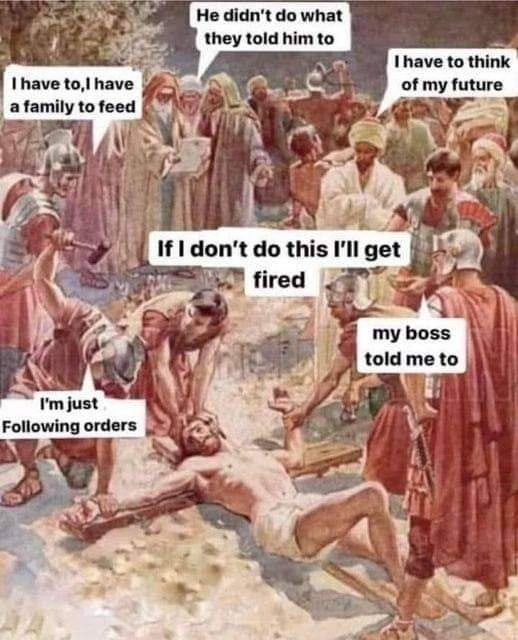
The oath makes no exceptions for conscience or for allegiances outside of the United States system—God is only called on to be a witness to one’s commitment to the state—though a scrupulous soldier might risk disobeying what she deems to be an unlawful or unconstitutional order and hope to not be punished for it later–an improvement upon Caesar’s sacramentum to be sure, but has the Christian who takes this modern sacramentum truly freed themself from the impossible task of trying to serve two masters?
While Tertullian is concerned about Christians disobeying Christ’s commands of nonviolence, it is allegiance which he is most concerned about here. He writes that even where “there is no necessity for taking part in sacrifices or capital punishments,” there is still “no agreement between the divine and the human sacrament.” One’s allegiance must be to Christ.
THE IDOLATRY OF STATISM
By Paul Maitrejean

Many Christians today are quick to leap to the defense of the current American regime. They will go to any length to defend its actions, particularly in the case of foreign policy and “culture” wars. On both sides of the aisle, Christians will throw their support behind virtually any politician of their particular political leaning regardless of their record, his words, or his current actions. Supporting without question the activities of the American government, particularly in foreign matters, has nearly become an unwritten prerequisite for being a Christian
Amazingly, these Christians are supporting and swearing allegiance to among the most godless, cruel, greedy, murderous governments in history. When this is pointed out, though, the supporters of the State will cite Scripture in their defense—usually the oft-heard and badly-twisted Romans 13:1—and they fall upon the dissenter like wolves. Is this the sort of mindset Jesus came among us to promote?
The government which they so ardently support is guilty of violating every God-given right. God gave us the right to life (Exodus 20:13)—but the American government is guilty of murder on every scale through assassination programs, unjust wars, taxpayer-funded abortion, drone strikes, and attacks on citizens (such as Waco and Ruby Ridge). God gave us the right to liberty (1 Peter 4:15)—but the American government has taken upon itself to tell us what we must and must not do, own, buy, sell, consume, and so on. It also imprisons people for nonviolent crimes and even arrests and incarcerates without evidence or trial. God has given us the right to property (Exodus 20:15) – but the American government imposes coercive taxes, confiscates possessions, and tells us what we can and cannot own. God gave us the right to privacy (I Peter 4:15) – but the American government gives itself license to spy on us through our computers, our telephones, our records, and by means of cameras, drones, and even our own neighbors.
If God grants these rights to life, liberty, property, and privacy and safeguards them through His divine law, then it logically follows that man has no authority to take them away. Man, however, through his fabrication known as The State, has given himself the perceived right to do exactly that – to define and even take away the rights of other men. In taking this gross license, man thus attempts to dethrone God and replace Him with the state
Should Christians not be outraged at this blatant usurpation? Should they not recognize blasphemy when they see it? Should they not call out Caesar for declaring himself to be god?
The vast majority of people who identify themselves as Christians not only disregard the blasphemy but even argue in favor of it. How dare you question the legitimacy of the innumerable wars we wage around the globe? How dare you suggest that the state is evil? How dare you advocate throwing off the yoke of human rule? Modern Christians are overwhelmingly in favor of the American state despite its trail of theft, enslavement, and murder over the past one hundred fifty years. They wave their flags, recite the Pledge of Allegiance, and repeat their statist mantras of “Support the troops!” “Land of the free!” “We’re a Christian nation!” “Love it or leave it!” “God bless America!” and so on.
The fact that they so willingly turn a blind eye to the state’s blasphemous and tyrannical nature and so enthusiastically give it their unwavering and unquestioning support, despite its ungodly nature, should make us wonder who their true god is.
In Daniel 2, the prophet explains Nebuchadnezzar’s dream, in which he saw great image “whose brightness was excellent . . . and the form thereof was terrible” (Daniel 2:31). This same image was composed of gold, silver, brass, and iron, which respectively represented the Babylonian, Persian, Greek, and Roman empires – kingdoms of men.
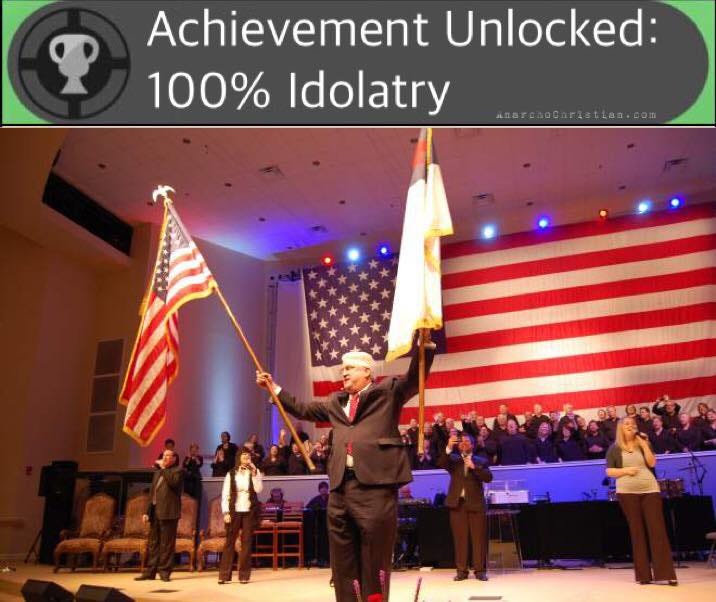
Throughout Scripture, “graven images” are most often associated with the pagan practice of idol worship (Leviticus 26:1). Human government is a fabrication of man. God never designed it. It is a concept that began exclusively in the minds of men, as early as the Garden of Eden when Adam and Eve succumbed to the lure of becoming “as gods” (Genesis 3:5). The Tower of Babel was but one culmination of man’s desire to rise to, if not beyond, God’s level (Genesis 11:4). Since then, man has raised himself up to rule over his peers, forming monarchies, dictatorships, democracies, oligarchies, republics, and many other forms of rule. Man has always been the one to manufacture systems of human rule. He makes his own graven image in the form of the state, sets it up in a place of prominence – a “high place”, if you will – and bows down to it, even punishing those who do not. Nebuchadnezzar took it to a literal level in Daniel 3 by creating a golden image which he commanded his subjects to worship. But in Daniel 4, we see that this was only an outward expression of his worship of self and the state he had forged into mighty Babylon:
“The king spake, and said, Is not this great Babylon, that I have built for the house of the kingdom by the might of my power, and for the honour of my majesty?” – Daniel 4:30
The state does not rise into power without the people first setting it in place themselves. They choose whether it will be a monarchy or republic, a democracy or an oligarchy. They create their image, their god, and when it takes power and begins to rule over them, they bow before it. Caesar would never have become regarded as a deity had the Roman people not set him there. Napoleon Bonaparte would not have become emperor had the French people not put in him a position to become so. Adolf Hitler would never have become der Fürher had the German people not recognized him in that capacity. The people of a nation create their graven image – the state, in whatever form it might take – and will always worship the work of their own hands.
The ancient Israelites were ruled directly by God through the judges up until the days of the prophet Samuel. When they became dissatisfied, they sought to have a king “like all the nations” (1 Samuel 8:5). They wanted to be like the pagan nations who were godless and lawless. They wanted to do away with the rule of God (1 Samuel 8:7) and set up their own state, their own graven image to worship, despite God’s many warnings against falling for the other nations’ idolatry (Joshua 23:6-8). God, frustrated with their rebellion, allowed them to make their graven image, and Israel fell prey to the nationalism, statism, and oppression that comes with human rule.
American Christians worship their own graven image. They reason, “We forged a union out of the thirteen colonies. We wrote a Constitution. We founded the three branches of the government. We elect our leaders.” This government is an image of their own making, and they would far rather bow down to it in adoration than admit that their false god is a god of wickedness.
Looking back at Nebuchadnezzar’s dream in Daniel 2, notice that the “graven image” is struck down and crushed by a stone that “was cut out without hands” (Daniel 2:34). This stone is, as we now know, representative of the Messiah, Jesus Christ. This stone “became a great mountain, and filled the whole earth” (Daniel 2:35). The absolute opposite of a graven image is an uncut stone. (Deuteronomy 27:5-6). God’s government is not created through the schemes and labors of men, but by the will of God. And that stone, the Messianic kingdom, did fill the entire earth, as we read in Matthew 28:18-19. He has triumphed over principalities and powers (Colossians 2:15). Jesus is King, and has overcome the kingdoms of men, rendering them to so much chaff on the wind – irrelevant, meaningless, void.
Then why do statist Christians, while claiming to follow “the stone cut without hands,” continue to bow down to the stone-cut images of men? Simply, they do not recognize the Kingdom of Jesus Christ. Like the ancient people before them, they insist upon worshiping the work of their own hands, which has turned into a beast that tramples them underfoot like insects, demanding more sacrifice, more devotion, more service. They have refused to tear down their high places, clinging to the idolatry of statism. They worship in awe and adulation (Revelation 13:4) while spurning the invitation of Jesus to invest themselves fully in the love and liberty of His magnificent kingdom.
“Come unto me, all ye that labor and are heavy laden, and I will give you rest. Take my yoke upon you, and learn of me; for I am meek and lowly in heart: and ye shall find rest unto your souls. For my yoke is easy, and my burden is light.” – Matthew 11:28-30
THE ASTONISHING POWER OF A FAITHFUL MUSTARD SEED REVOLUTION
By Cody Cook
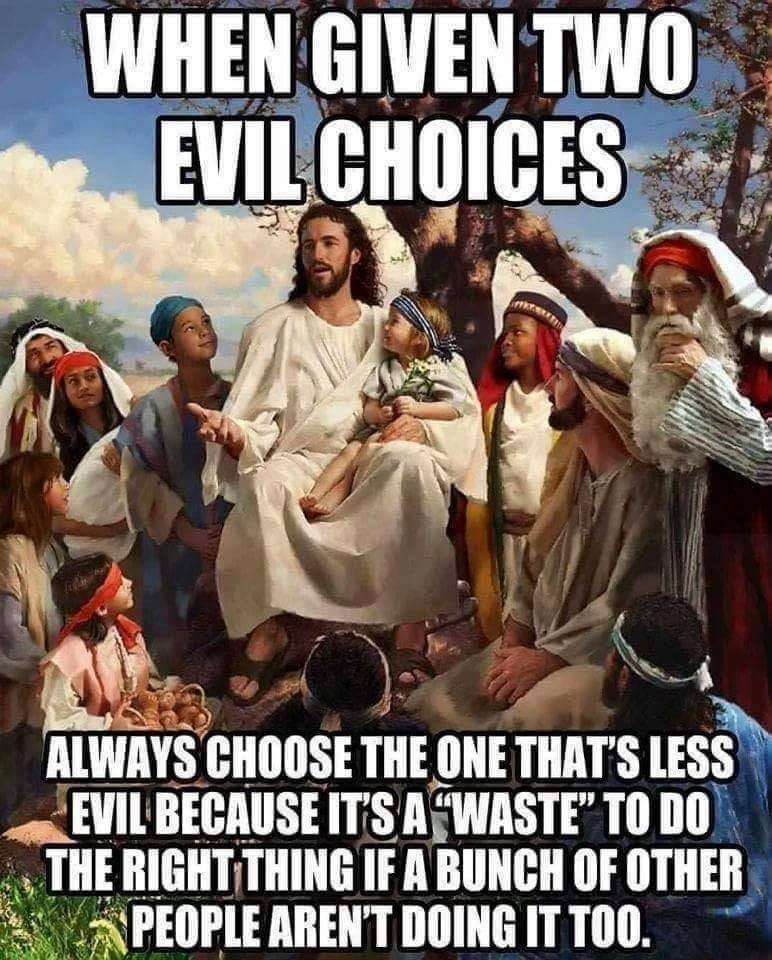
Tucked away in one of Jesus’ short, unassuming parables is a hidden subversive message that pronounces coming judgment upon mankind’s systems of power.
It all starts with a little mustard seed… While there are plenty of passages in the Bible which explicitly contradict the tenets of Christian nationalism and pronounce impending judgment upon the kingdoms of men, it’s become increasingly apparent to me that this opposition is so thoroughly ingrained into the biblical worldview that it can be implicitly found in many places where you wouldn’t expect it.
For example—the parable of the mustard seed. It’s familiar to many Christians, but I’ll reproduce it here since it’s so short:
He presented another parable to them, saying, “The kingdom of heaven is like a mustard seed, which a man took and sowed in his field; and this is smaller than all other seeds, but when it is full grown, it is larger than the garden plants and becomes a tree, so that THE BIRDS OF THE AIR come and NEST IN ITS BRANCHES” – Matthew 13:31-32 (NASB)
Mustard seed as an anti-state metaphor
How does this passage oppose the present political order? You might have noticed that a handful of words are capitalized in this translation. That’s one way that some Bible translations alert their readers that the Old Testament is being quoted in the New.
These quotations can be hugely important, shedding light on the meaning of the New Testament author who quotes them. If we’re good Bible readers, we’ll want to know what passage is being quoted here.
But that’s where things get a little complicated. Technically, this language occurs more than once in the Old Testament, though the most relevant passage is from Ezekiel 17.
The prophet Ezekiel speaks of how Judah’s king, Zedekiah, had sought to make an alliance with Egypt to protect his kingdom from Babylonian occupation. This move may have made some tactical sense, but it was also against the command of God. As a result of this disobedience, God promised that Zedekiah’s plan would fail, his troops would be smashed, and he would die in Babylon.
But Ezekiel didn’t just say this plainly. Like Jesus, he used a parable. Zedekiah was like a branch from a large tree that was plucked by a great eagle—the king of Babylon—and brought to his city.
When the shoot was planted, it became a low vine spreading out to entangle itself with another great eagle—Egypt. But despite its attempt at self-preservation, the vine was destined to wither in the soil.
That was the bad news. But Ezekiel also promised good news for the future:
Thus says the Lord GOD, “I will also take a sprig from the lofty top of the cedar and set it out; I will pluck from the topmost of its young twigs a tender one and I will plant it on a high and lofty mountain. On the high mountain of Israel I will plant it, that it may bring forth boughs and bear fruit and become a stately cedar.
And birds of every kind will nest under it; they will nest in the shade of its branches. All the trees of the field will know that I am the LORD; I bring down the high tree, exalt the low tree, dry up the green tree and make the dry tree flourish. I am the LORD; I have spoken, and I will perform it” – Ezekiel 17:22-24 (NASB)
Careful readers of the New Testament may be surprised to see Ezekiel using themes and concepts more closely associated with Jesus’ teaching about Himself and His kingdom. The small branch —a future king—will be planted on a high mountain and eventually become a large tree that provides for all the world’s living things. This closely parallels not only Jesus’ image of the tiny mustard seed, but it also suggests the surprising reversals that come in its wake.
The seemingly insignificant branch becomes a tree that the others learn they must bow down to. The trees that are now high and flourishing (the kingdoms of men) will die when God performs this miraculous reversal of fortunes.
As the New Testament scholar Craig Keener wrote in his commentary on Matthew:
Jesus insists that the kingdom, though present in a hidden way in the ministry of Jesus and his followers, is the glorious anticipated kingdom of God (13:31-33). These parables most clearly declare that God’s kingdom had arrived in some sense in Jesus’ ministry, in a hidden and anticipatory way… Far from baptizing the wicked in fire and overthrowing nations at his first coming, Jesus had come as a meek servant (12:18-20), wandering around Galilee with a group of obscure disciples, healing some sick people…
Jesus’ initial arrival as a meek and politically inconspicuous servant rendered his mission as opaque as his parables, except to disciples bearing the insight of faith. Only those who press into Jesus’ circle truly understand his identity.⁸
Against confusing the kingdom of God with political movements
In other words, the kingdom of God does not look like earthly kingdoms. Keener’s claim that “only those who press into Jesus’ circle truly understand his identity” suggests that if we confuse the kingdom of God with a contemporary political movement, we are missing who Jesus is and our claim to being His disciples is questionable.
As mentioned above, this isn’t the only place in the Old Testament where this kind of language is used. Perhaps Jesus had one of the other passages in mind and did not mean to make such subversive claims about the state? Possibly, except the other places where this language occurs in the Old Testament communicate the same basic principles about the kingdoms of men that Ezekiel 17 does.
For instance, when Daniel was in exile in Babylon, he interpreted the meaning of a dream that king Nebuchadnezzar had of an enormous and fruitful tree whose branches were visible to the ends of the earth.
This tree was so imposing that “the beasts of the field found shade under it, And the birds of the sky dwelt in its branches, and all living creatures fed themselves from it” (Daniel 4:12, NASB).
Suddenly, unexpectedly, judgment was proclaimed against the tree and it was ordered to be chopped down. This is what would happen to Nebuchadnezzar until he learned “that the Most High is ruler over the realm of mankind and bestows it on whomever He wishes” (Daniel 4:17, NASB)
The rest of Daniel has no better news for the kingdoms of men, which are compared to wild beasts that are fit to be slain at the coming of God and then thrown into a lake of fire (Daniel 7, see also Daniel 2).
Finally, this language also occurs in Ezekiel 31:3-14, this time of the Assyrian empire. I’ll bet you can’t guess what Ezekiel predicted would happen to it:
Behold, Assyria was a cedar in Lebanon
With beautiful branches and forest shade,
And very high,
And its top was among the clouds…
All the birds of the heavens nested in its boughs,
And under its branches all the beasts of the field gave birth,
And all great nations lived under its shade…Therefore thus says the Lord GOD, “Because it is high in stature and has set its top among the clouds, and its heart is haughty in its loftiness, therefore I will give it into the hand of a despot of the nations; he will thoroughly deal with it. According to its wickedness I have driven it away…
On its ruin all the birds of the heavens will dwell, and all the beasts of the field will be on its fallen branches so that all the trees by the waters may not be exalted in their stature, nor set their top among the clouds, nor their well-watered mighty ones stand erect in their height.
For they have all been given over to death, to the earth beneath, among the sons of men, with those who go down to the pit.” – Ezekiel 31:3-14 (NASB)
Like much of what Jesus told His disciples, this short little parable really packs a wallop. While you might be able to guess from the broader context of Jesus’ mission and teaching that the mustard seed-like Kingdom of God is surprising and maybe even subversive, the contours of its meaning really become visible when we read it in light of the Old Testament passages which inspired it and gave it its meaning.
And that meaning becomes increasingly clear the more we dig in —the kingdoms of men will be destroyed by God and the kingdom of God will replace them. Since we know this to be true, we had better join the mustard seed revolution while we can.
IS AMERICA THE LAST, BEST HOPE OF THE WORLD?
By Jeff Wright
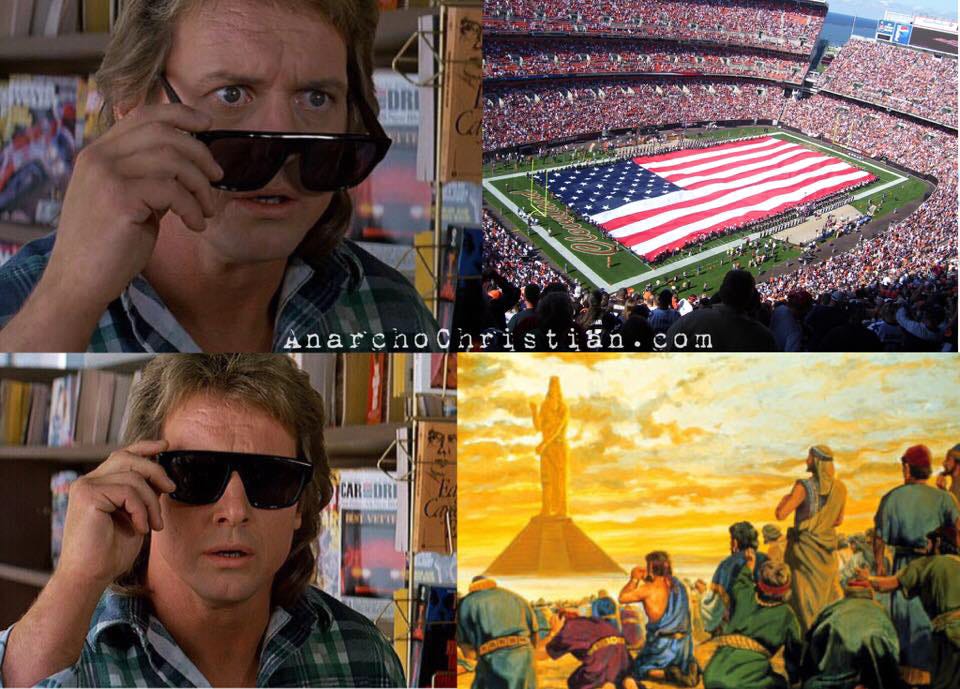
The idea that America is the last, best hope of the world is the spirit that animates a great deal of political activity in our country. The “last, best hope” is one of the most enduring rallying cries preached to garner support and enthusiasm for major government initiatives throughout American history. It has become such a widely accepted notion that its veracity and relevance for lawmaking and executive action is simply assumed, even among Christians.
In his first inaugural address in 1801, Thomas Jefferson reasoned, “I know, indeed, that some honest men fear that a republican government cannot be strong, that this Government is not strong enough; but would the honest patriot, in the full tide of successful experiment, abandon a government which has so far kept us free and firm on the theoretic and visionary fear that this Government, the world’s best hope, may by possibility want [lack] energy to preserve itself? I trust not.” Jefferson lifted America’s republican form of government up as the world’s best hope. Abraham Lincoln returned to the theme six decades later while the world’s best hope, as embodied by the Union, was in danger of dissolving. Speaking in his Second Annual Message to Congress in 1862, Lincoln movingly declared, “Fellow-citizens, we cannot escape history. We of this Congress and this Administration will be remembered in spite of ourselves. No personal significance or insignificance can spare one or another of us. The fiery trial through which we pass will light us down in honor or dishonor to the latest generation. We say we are for the Union. The world will not forget that we say this. We know how to save the Union. The world knows we do know how to save it. We, even we here, hold the power and bear the responsibility. In giving freedom to the slave we assure freedom to the free — honorable alike in what we give and what we preserve. We shall nobly save or meanly lose the last best hope of earth.”
For Lincoln, an intact Union personified the cause of freedom in the world. The freedom provided by a united America was the last best hope of the earth.
Ronald Reagan famously revived the theme in 1964 in an effort to strengthen Barry Goldwater’s presidential candidacy during his nationally-televised “A Time for Choosing” speech: “You and I have a rendezvous with destiny. We will preserve for our children this, the last best hope of man on earth, or we will sentence them to take the first step into a thousand years of darkness. If we fail, at least let our children and our children’s children say of us we justified our brief moment here. We did all that could be done.” Reagan persuasively championed “the maximum of individual freedom consistent with order.” He exposed governmental force, coercion, and control of the people and warned against a path that would lead to “the ant heap of totalitarianism.” For Reagan, the destiny of the nation and therefore the entire world rested upon the outcome of this presidential election.
On the campaign trail in 2008, Barack Obama carried the theme to new heights preaching, “The journey will be difficult. The road will be long. I face this challenge with profound humility, and knowledge of my own limitations. But I also face it with limitless faith in the capacity of the American people. Because if we are willing to work for it, and fight for it, and believe in it, then I am absolutely certain that generations from now, we will be able to look back and tell our children that this was the moment when we began to provide care for the sick and good jobs to the jobless; this was the moment when the rise of the oceans began to slow and our planet began to heal; this was the moment when we ended a war and secured our nation and restored our image as the last, best hope on earth.”
A bipartisan foursome worthy of their own Mount Rushmore – the author of the Declaration of Independence, the Great Emancipator, the Great Communicator, and the personification of Hope and Change – all upheld the United States of America, its form of government, its influence for freedom, and even its ability to heal the very planet itself as the last, best hope of humankind.
While Barack Obama represents a leftist vision of America as the last best hope, conservatives have their versions of the theme as well. Conservative thinker Bill Bennett responded to what he perceived to be a decline in young Americans’ understanding of what makes America so great, despite its imperfections, with his three-volume set: America – The Last Best Hope. Fellow conservative sage, Dennis Prager, recently offered his contribution, Still the Best Hope, in which he contrasts the competing visions of “Leftism,” “Islamism,” and, what he calls, “Americanism”: a “trinity” of core values – “Liberty,” “In God We Trust,” and “E Pluribus Unum.” While there may be competing ideas as to which values best represent the American ideal, it is widely held across the political spectrum that America is the last, best hope on earth.
The question for American evangelicals is this: is America truly the last, best hope of the world? Let me begin to respond to this question by first asking, are there any alternatives that ought to come to mind when Christians begin to consider this question? Is there anything else Christ-followers might believe is the hope of the world? Do we as “little Christs” have a competing theory? Any “good news” on the topic? What’s that? The gospel of Jesus Christ, you say? Yes, I think that may be it!
“C’mon, that goes without saying!” you might reply. Does it? Early Christians promulgated the New Testament creed that is commonplace and almost boring today: “Jesus is Lord!” Yes, we say, Jesus is Lord of my life. He’s the Lord of my heart. This may be what “Jesus is Lord” means to many Christians today but in the 1st century it was a competing pledge of allegiance that directly contradicted the loyalty oath of the Roman empire: “Caesar is lord.” Jesus came to establish his own kingdom, the kingdom of God. When a Christian declared “Jesus is Lord,” the obvious and deliberate implication was, “Caesar is not.”
Just as a Christian in the first century would never make the claim that Caesar or the Roman Empire is the last, best hope of the earth, Christians today make a mistake by elevating any kingdom of this world to the status of “the hope of mankind.” When we slip into the mindset that America is the best hope of the world along with the assumption that we must do something to preserve this status, we will eventually find ourselves supporting acts by the government that are contrary to the kingdom that deserves our first and ultimate allegiance, the kingdom of God.
The kingdoms of the world and the kingdom of God offer radically different visions for the world. American evangelicals along with all Christians ought to reject the idea that America is the last, best hope of earth because this is a form of idolatry. It is giving a status that ought to be reserved for God to someone or something else. If America is the best hope of the world then the good news of Jesus Christ and his kingdom is not.
Unless we strongly affirm the earliest of Christian creeds, Jesus is Lord, we will tend to give the agendas of earthly kingdoms undue importance. Unless we me make it clear that our ultimate allegiance is to Jesus Christ and his kingdom, we will tend to look to the State rather than the church for the solutions to life’s challenges. If America is the hope of the world then the State ought to export this hope to the world and Christians should enlist in that cause. However, if Jesus Christ is the hope of the world then the church ought to be about the business of the kingdom of God.
America as the last, best hope of the world was chosen as a “myth of American evangelicalism” because it is one of the underlying assumptions of both conservative and progressive evangelicals. Both camps believe that if they can just gain control of the State then they can use its powers for good. They just differ on what “good” looks like. And when they’re implementing their version of good, they’re “restoring” America’s status as the last, best hope of the world as Barack Obama put it.
Preserving a grip on the reins of governmental power causes evangelicals to embrace or overlook what was “evil” when their opponents held the reins of power. Progressive evangelicals who howled in righteous indignation over the war in Iraq and American imperialism under President Bush fell silent when their preferred “Peace President” bombed seven different nations. In November of 2011, President Obama boasted to troops returning from Iraq, “That’s part of what makes us special as Americans. Unlike the old empires, we don’t make these sacrifices for territory or for resources. We do it because it’s right.” Same means, just the “right” ends (and notice the language of “empire”). On the other hand, many of the conservative evangelicals who applauded the civil liberties violations of the Patriot Act under President Bush are now decrying the Obama Administration’s use and expansion of these same policies as a “police state.” Contradictions such as these are tolerated because of the larger aim of controlling the do-gooder powers of the last, best hope of the world.
Liberty-minded evangelicals support the furtherance of peace and the preservation of civil liberties during all administrations. We don’t need the State to coerce others into doing good. We have the superior resources of the kingdom of God. The State, American or otherwise, is not the last, best hope of the world, Jesus Christ is. Jesus Christ is Lord and therefore all other Caesars are not.
SHOULD CHRISTIANS CITE THE PLEDGE OF ALLEGIANCE?
By Laurence Vance
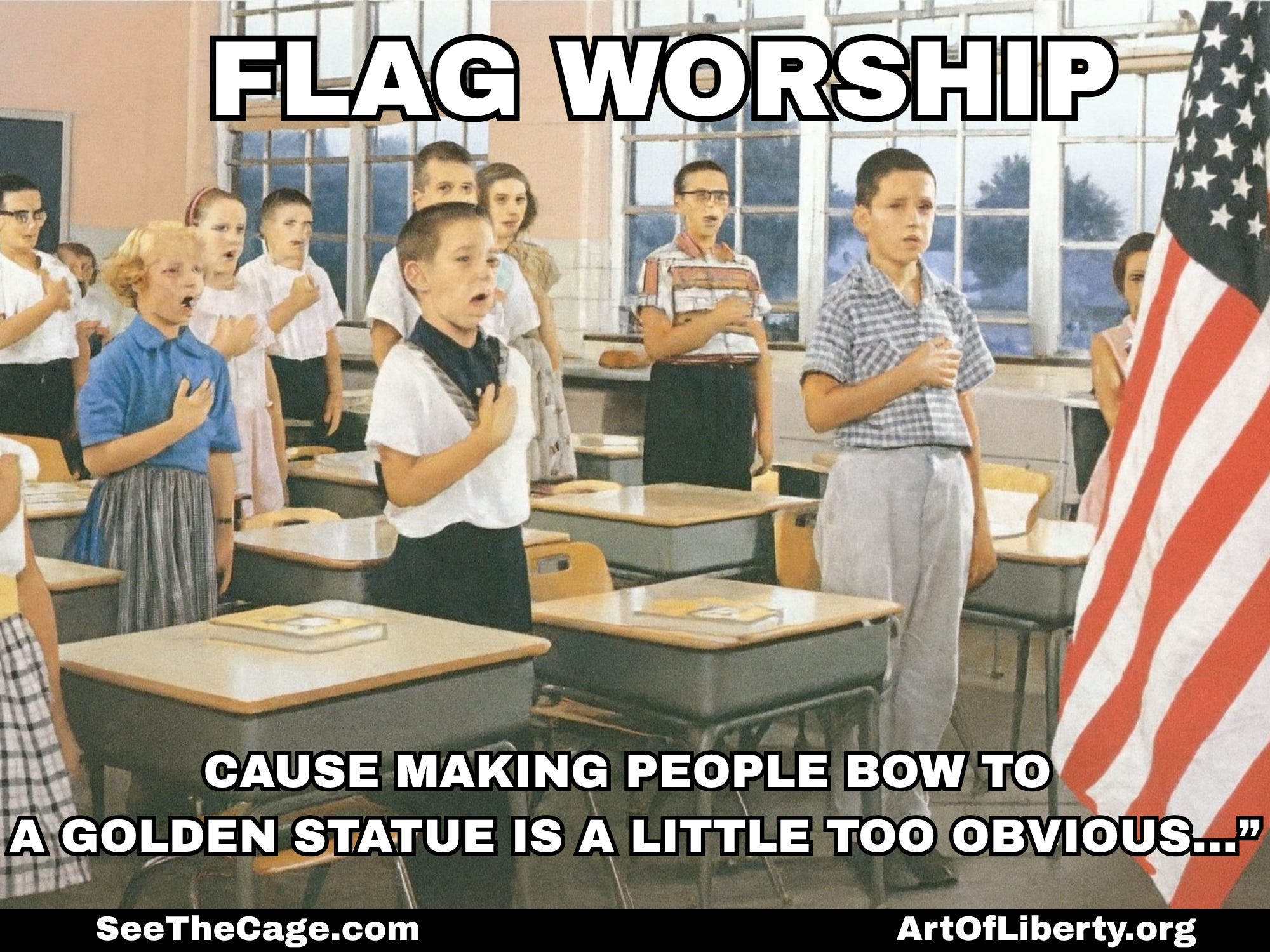
“I pledge allegiance to the flag of the United States of America, and to the republic for which it stands, one nation under God, indivisible, with liberty, and justice for all.”
There are three holidays that cause otherwise sound-in-the-faith evangelical, conservative, and fundamentalist Christians to lose their religion.
I am referring to Memorial Day, the Fourth of July, and Veterans Day
One of these holidays doesn’t even have to fall on a Sunday for some churches to go wild with celebration.
Memorial Day, of course, is always observed on a Monday. The other two holidays only fall on a Sunday every seven or so years. But if one of them doesn’t happen to fall on a Sunday, the Sunday before the holiday will do just as well. In some years, like when the Fourth of July or Veterans Day occurs late in the week, the Sunday after the holiday is reserved by some churches for observation.
As if the blind nationalism, hymns to the state, and exaltation of the military that occurs in some churches on these Sundays isn’t bad enough, sometimes the festivities also include the reciting of the Pledge of Allegiance, in church, by the congregation, facing the flag on the platform. The Pledge is usually led by the pastor or a boy scout or veteran, sometimes in uniform.
This is not only unfortunate; it is an anti-biblical disgrace.
There are several reasons why no one that treasures liberty, is familiar with American history, and knows the history behind the Pledge (an ad campaign to sell magazines) would waste his time saying the Pledge. I want to focus on one of them.
There are also several reasons why Christians that treasure liberty, are familiar with American history, and know the history behind the Pledge (written by a socialist minister) would waste his time saying the Pledge. Again, I want to focus on one of them.
In 2000, an atheist sued his daughter’s school district because he said that the words “under God” in the Pledge amounted to an unconstitutional establishment of religion. He lost.
After an appeal by the atheist parent, the Ninth Circuit Court of Appeals ruled in 2002 that the phrase in question was unconstitutional.
After an appeal by the school district, the U.S. Supreme Court ruled in 2004 that the father of the child lacked standing to file the lawsuit because his daughter’s mother had sole legal custody of her and that she was not opposed to her daughter reciting the Pledge. The ruling of the appeals court was then reversed.
In 2010, the same federal appeals court upheld the words “under God” in the Pledge in another case, ruling that the phrase does not constitute an establishment of religion.
The idea that the words “under God” in the Pledge of Allegiance violate the Establishment Clause of the First Amendment is ludicrous. As stated by the Ninth Circuit Court of Appeals in its 2010 ruling:
Not every mention of God or religion by our government or at the government’s direction is a violation of the Establishment Clause…
We hold that the Pledge of Allegiance does not violate the Establishment Clause because Congress’ ostensible and predominant purpose was to inspire patriotism and that the context of the Pledge – its wording as a whole, the preamble to the statute, and this nation’s history – demonstrate that it is a predominantly patriotic exercise. For these reasons, the phrase “one Nation under God” does not turn this patriotic exercise into a religious activity.¹¹
However, just because the phrase “under God” in the Pledge doesn’t violate the Constitution doesn’t mean that it belongs in the Pledge or, more importantly, that Christians should recite the Pledge.
One reason why Christians should not recite the Pledge is a simple one, and one that has nothing to do with patriotism or religion.
The United States is not a nation “under God.”
The United States is in fact about as far from being “under God” as any country on the planet.
The United States leads the world in the incarceration rate, the total prison population, the divorce rate, car thefts, rapes, total crimes, illegal drug use, legal drug use, and Internet pornography production.
At least the United States is second to Russia when it comes to abortions.
According to the Guttmacher Institute, “nearly half of pregnancies among American women are unintended, and about four in 10 of these are terminated by abortion” and “twenty-two percent of all pregnancies (excluding miscarriages) end in abortion.” There are over 1,700 abortion providers in the United States. And even worse, 37 percent of women obtaining abortions identify as Protestant and 28 percent as Catholic.
Only a madman would say that the United States is a nation “under God.”
“Oh, but the Pledge is just some words,” some say, the reciting of which doesn’t really mean anything.
Then why say it? If the Pledge is just some words that don’t really mean anything, then it makes more sense not to say it than to say it.
The Pledge doesn’t say that the United States used to be one nation under God. It doesn’t say that the United States should be one nation under God. It says that the United States is one nation under God.
That is a lie.
Christians are not supposed to lie:
“Lie not one to another, seeing that ye have put off the old man with his deeds” (Colossians 3:9).
“Wherefore putting away lying, speak every man truth with his neighbour: for we are members one of another” (Ephesians 4:25).
“Thou shalt not bear false witness” (Romans 13:9).
Is it unpatriotic to not say the Pledge? It may be. But it is certainly right, Christian, and biblical not to.
ARE YOU AN IMPERIAL CHRISTIAN?
By Laurence Vance
The tenets of imperial Christianity include things like blind nationalism, belief in American exceptionalism, willful ignorance of U.S. foreign policy, childish devotion to the military, cheerleading for the Republican Party, acceptance of the U.S. empire, and support for a perpetual war on terror – all, of course, with a Christian twist for effect. In other words, the views of Mike Huckabee, Sarah Palin, Michele Bachmann or Rick Perry
I have some simple yet pointed questions for Christians who subscribe to, or can be characterized by, the above things:
-
Is the president of the United States God?
-
Is America the nation of Israel?
-
Is the United States the chosen state of God?
-
Is the U.S. military the Lord’s army?
-
Does the United States enjoy a special relationship with God that other nations don’t have?
-
Is the Christian’s sword anything but the word of God?
-
Does the Bible command any Christian to kill any adherent of a false religion?
-
Does the Bible command any Christian to go on a crusade against Muslims?
-
Does “obeying the powers that be” mean that Christians should always do anything and everything the government says?
-
Does the Bible say that anyone other than God should receive unconditional obedience?
-
Is it okay for Christians to participate in U.S. government wars just because God commanded the Jews in the Old Testament to go to war?
-
Does the Lord approve of everything the U.S. government does?
-
Does the Lord approve of everything the government of Israel does?
-
Is being patriotic more important than being biblical?
-
Is the Republican Party the party of God?
-
Is it more scriptural for a Christian to be in the military than in the ministry?
-
Does God need America’s help to protect Israel?
-
Does God need the U.S. military to maintain order throughout the world?
-
Is the U.S. military a godly institution?
-
Is the CIA a godly institution?
-
Did God command the United States to build over 1,000 foreign military bases?
-
Did God command the United States to station troops in over 150 countries?
-
Does God always approve of U.S. foreign policy?
-
Is it biblical that churches send more soldiers to the Middle East than missionaries?
-
Did God appoint the United States to be the world’s policeman?
-
Does the New Testament command churches to hold special military appreciation days?
-
Does the New Testament command churches to glorify the military on the Sunday before national holidays?
-
Have U.S. wars always been just, right, and good?
-
Are all Muslims terrorists?
-
Was every Iraqi and Afghan killed by the U.S. military a terrorist?
-
Does the New Testament encourage Christians to wage war against anyone or anything but the world, the flesh, and the devil?
If you are a Christian and answered in the affirmative to one or more of these questions, then I understand why you are an imperial Christian. Repent.
But if you are a Christian and answered in the negative to all of these questions, then why are you an imperial Christian? Why do you make apologies for the state, its leaders, its military, its wars, its imperialism, and its interventionism? Why are you so devoted to the Republican Party? Why do you sing songs to the state in church on the Sunday before national holidays? Why do you encourage Christian young people to join the military? Why do you recite meaningless prayers for God to bless U.S. troops engaged in unjust wars?
Think about these things. Pray about them. Meditate on them. Just don’t be an imperial Christian.
ABOUT THE LIBERTARIAN CHRISTIAN INSTITUTE
The Libertarian Christian Institute is a federal 501(c)(3) tax-exempt educational and religious nonprofit organization that promotes libertarianism from a Christian point of view. We are convinced that libertarianism is the most consistent expression of Christian political thought. LCI is ecumenical in nature, welcoming all those who confess the traditional creeds of the universal church.
Our goals are to persuade our fellow Christians through online programs, physical publications, in-person conferences, regional small group meetups, and to love our fellow libertarians as Jesus would have us do. Our online presence is unmatched in the libertarian community, with hundreds of articles, book reviews, videos, podcasts, news reports, and much more. Dr. Horn is regularly sought after for a Christian libertarian perspective on a variety of political and cultural topics. Most recently, our Christians For Liberty Conferences have brought hundreds of Christian Libertarians together to share and to learn from great speakers in Austin, Texas.
As the Libertarian Christian Institute grows, we are actively seeking out donors who desire to see an organization such as this make a positive difference in the church and in the world today for liberty and for Christ. Learn how to participate in our mission to equip the church to make the Christian case for a free society by visiting LibertarianChristians.com.
Our Vision: Christians Embracing a Free Society
The Libertarian Christian Institute envisions a world where Christians promote the values and principles of a free society as the most consistent expression of Christian political thought. We see a world where, instead of polarizing to the left or right, Christians demonstrate that individual liberty is a force for the common good. We aim to persuade Christians that the political expression of our faith inclines us toward the principles of individual liberty and free markets.
Our Mission: Equipping Christians to Spread the Message of Individual Liberty
We seek to create quality resources to equip Christians to promote individual liberty among their families, friends, ministries, and churches. We view ourselves as a contributor to the vast resources of libertarian content online by making the Christian case for a free society. We resist the assumption that the default political position of Christianity is domination and control, and we combat this by employing studies in history, theology, and biblical exegesis in a variety of venues.
THE CORE VALUES OF A LIBERTARIAN CHRISTIAN
-
Christian Political Philosophy Should be Informed by a Holistic View of Scripture, Reason, and Historical Theology
A comprehensive view of the biblical narrative indicates that the Church’s proclamation of Jesus’ lordship is not a mere personal statement of allegiance; it is also an anti-imperial declaration that the way of peace comes through Christ’s counter-cultural kingdom of love and service. Followers of Christ are called to be a prophetic voice against the powers of domination and violence. The State — the monopolized institution of force in society — is never to be confused with the Kingdom of God, and when the power of the state grows, the rightful influence of churches, families, and local communities is diminished.
-
A Free And Civil Society Depends Upon Respect For The Non Aggression Principle
The ethics modeled by Christ and the early Church call us to change the world and build the Kingdom of God through service rather than force; through persuasion rather than coercion. The use of political force to compel ethical behavior cannot change hearts and only antagonizes our struggle against sin, death, and evil. Christians must call for repentance from sin in humility and never with violence. As such, a consistently Christian ethic always embodies non-aggression.
-
Individual Liberty and the Common Good are not at Odds
As God is intrinsically relational within the Trinity, so also human beings are created to live in community. Sin has marred the communal relationships for which we were created by pitting individuals against God, against one another, and against the earth for which we are called to be wise stewards. Affirming the dignity, worth, and rights of the individual as an image-bearer of God is a first step toward restoring authentic, Christ-centered community among diverse individuals. Because society is comprised of individuals, a healthy society requires healthy individuals. Through voluntary cooperation and respect for freedom, people can join together to trade, innovate, create, collaborate, share, and build a world that simultaneously respects the individual and betters our neighbor.
-
Social Institutions Matter for Human Flourishing
Humans are created to be social beings, and God’s design is that we work together to develop institutions which promote human flourishing. Insofar as these institutions are voluntary, peaceful, and non-coercive, human beings possess the God-given capacity to solve the worst of problems in the best of ways. Social institutions founded upon mutual cooperation — such as marriage, family, church, organizations, and businesses — are vital for authentic humanity
-
Christian Theology Affirms the Essential Tenets of Free Market Economics
Respect for private property, voluntary exchange, condemnation of theft, and the value of cooperation and service towards achieving common goals flow naturally from Christian thought and habit. This is what defines “capitalism” in the libertarian view.
Wealth is a tool given by God, and all who possess such wealth are expected to utilize it for God’s Kingdom and the good of our neighbor. Taxation and regulation tend to destroy wealth, discourage innovation, and centralize power, and therefore hamper our ability to fulfill the calling of God. Where free markets are allowed to flourish, human beings will prosper both materially and spiritually. Additionally, Christian ethics helps equip our economies for service toward God and neighbor.
Even if you don’t call yourself a libertarian, if you share our affinity for these core values, we count you among our ranks. We hope that you will want to partner with us to help spread the message of liberty by making the Christian case for a free society. You can help us keep the message alive and growing at LibertarianChristians.com

Get the Hardcopy Booklet from the Art of Liberty Foundation
The Art of Liberty Foundation has been distributing this pamphlet from the Libertarian Christian Institute for years as a PDF in our credit card-sized, uncensorable flashdrive o freedom, The Liberator and in its free Dropboxes. This year we have struck a deal with the Libertarian Christian Institute to reprint the pamphlet (without Etienne’s memes) and add it to our on-line store at ArtOfLiberty.org/Store.
The printing order has been placed and we are now accepting pre-orders that are scheduled to arrive and begin shipping on January 12th.
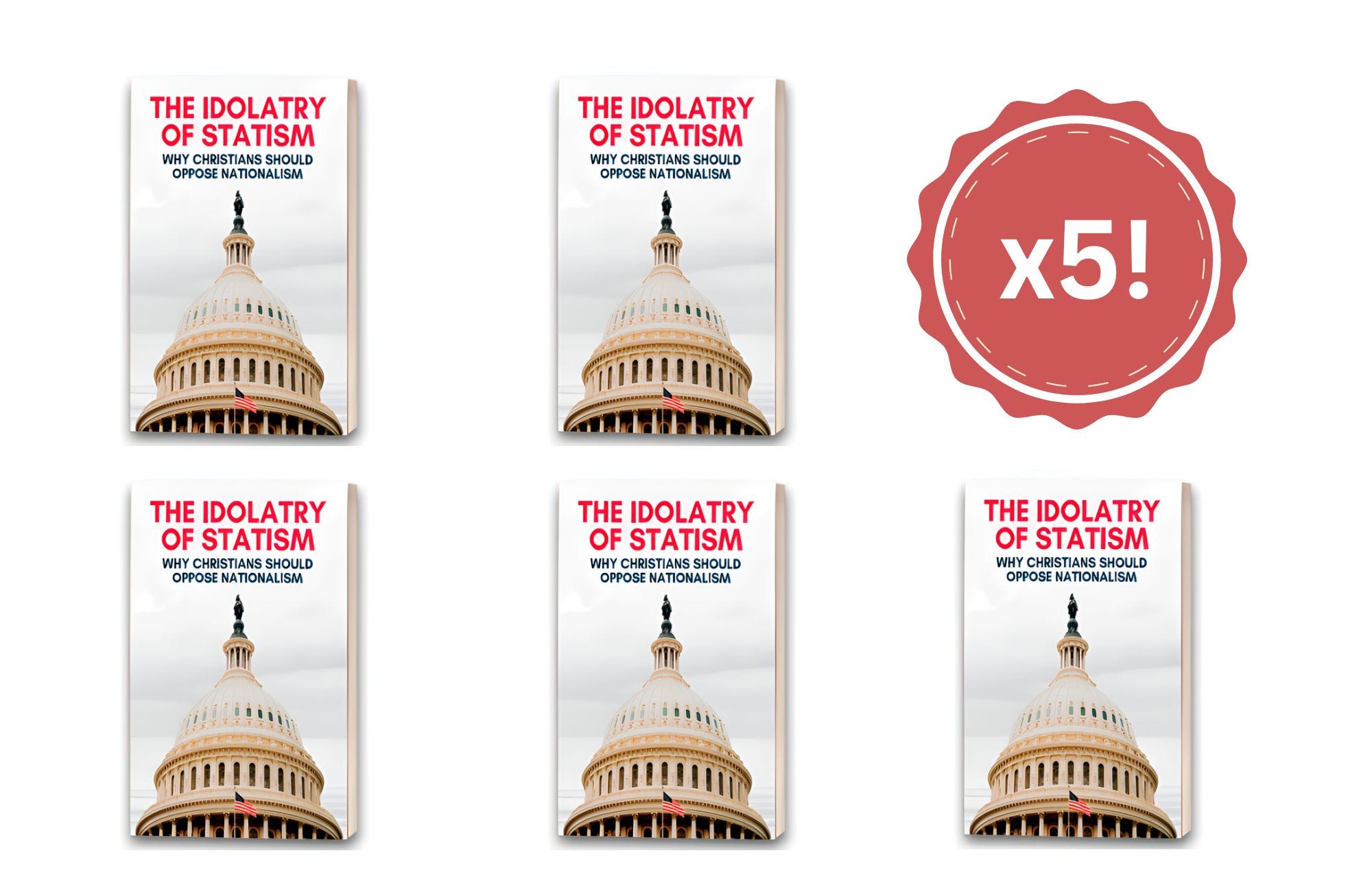
Order a Single Copy for $4.95 here: https://artofliberty.org/product/the-idolatry-of-statism/
Order a Five Copy “Friends Bundle” for $20 here: https://artofliberty.org/product/5-copies-of-what-anarchy-isnt-the-idolatry-of-statism/