By Murray N. Rothbard
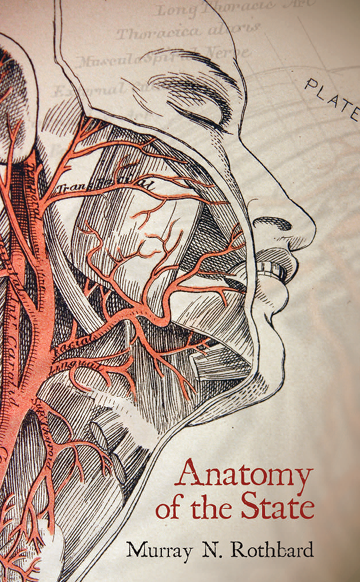
Murray Rothbard was known as the state’s greatest living enemy, and this is his most succinct and powerful statement on the topic. He explains what a state is and what it is not — showing how it operates under a false cover, wrecking freedom, destroying civilization, and threatening lives, property, and social well-being, all under the veneer of “good intentions.”
NOTICE: Limit of 3 copies per order. This copy is made available in cooperation with the Mises Institute. If you only want the book, you would pay just shipping & handling — or become an Art of Liberty Sponsor to help us continue distributing works like this one for free.
60 pages
$0.00
49 in stock (can be backordered)
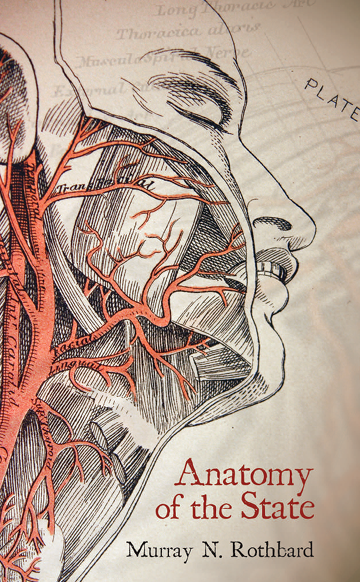
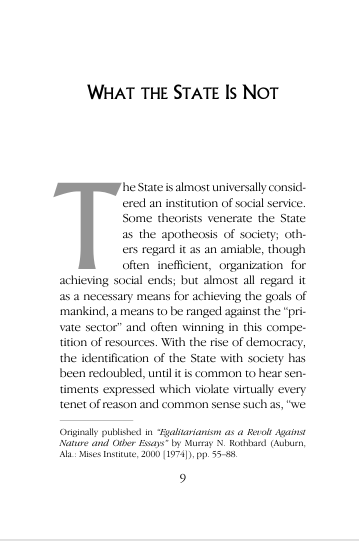
Anatomy of the State is widely regarded as one of Murray N. Rothbard’s most essential and enduring works — a concise but devastating breakdown of what the state actually is, stripped of the myths and euphemisms that usually surround it.
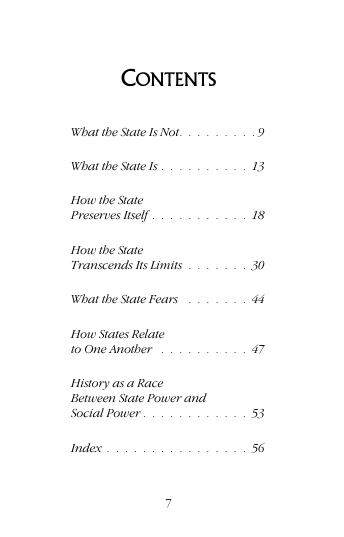
Drawing on the tradition of Franz Oppenheimer and Albert Jay Nock, Rothbard argues that the state is not a voluntary institution serving the public good, but a coercive apparatus that survives by extracting resources from the productive class rather than creating value itself. He examines how states expand their power over time, how they manufacture public consent through propaganda and “court intellectuals,” and how seemingly democratic institutions can still function as tools of domination.
Rothbard applies these ideas directly to American history, making the book not just a work of political theory, but a lens for understanding real-world political developments — from the growth of federal power to the role of the press and academia in legitimizing state authority.
Despite its brevity, Anatomy of the State remains one of the clearest introductions to libertarian and anarcho-capitalist thought available today, and continues to be recommended as essential reading for anyone questioning the nature and legitimacy of government power.
About the Author
Murray N. Rothbard (1926–1995) was an American economist, historian, and political theorist, and one of the most influential figures of the modern libertarian movement. A student of Ludwig von Mises, Rothbard helped develop and popularize the Austrian School of economics in the United States and was a driving force behind the founding of the Mises Institute.
| Weight | 0.13 lbs |
|---|---|
| Dimensions | 7 × 4.25 × 0.14 in |